
Driving in monsoon rain and flash-flood warnings
How should you handle Las Vegas streets during July to September monsoon rain and flash-flood warnings?
This guide helps new teen and adult drivers make safe choices when desert storms hit the valley. It draws on Onramp instructor practice and our weather policy rather than specific Nevada DMV statutes.
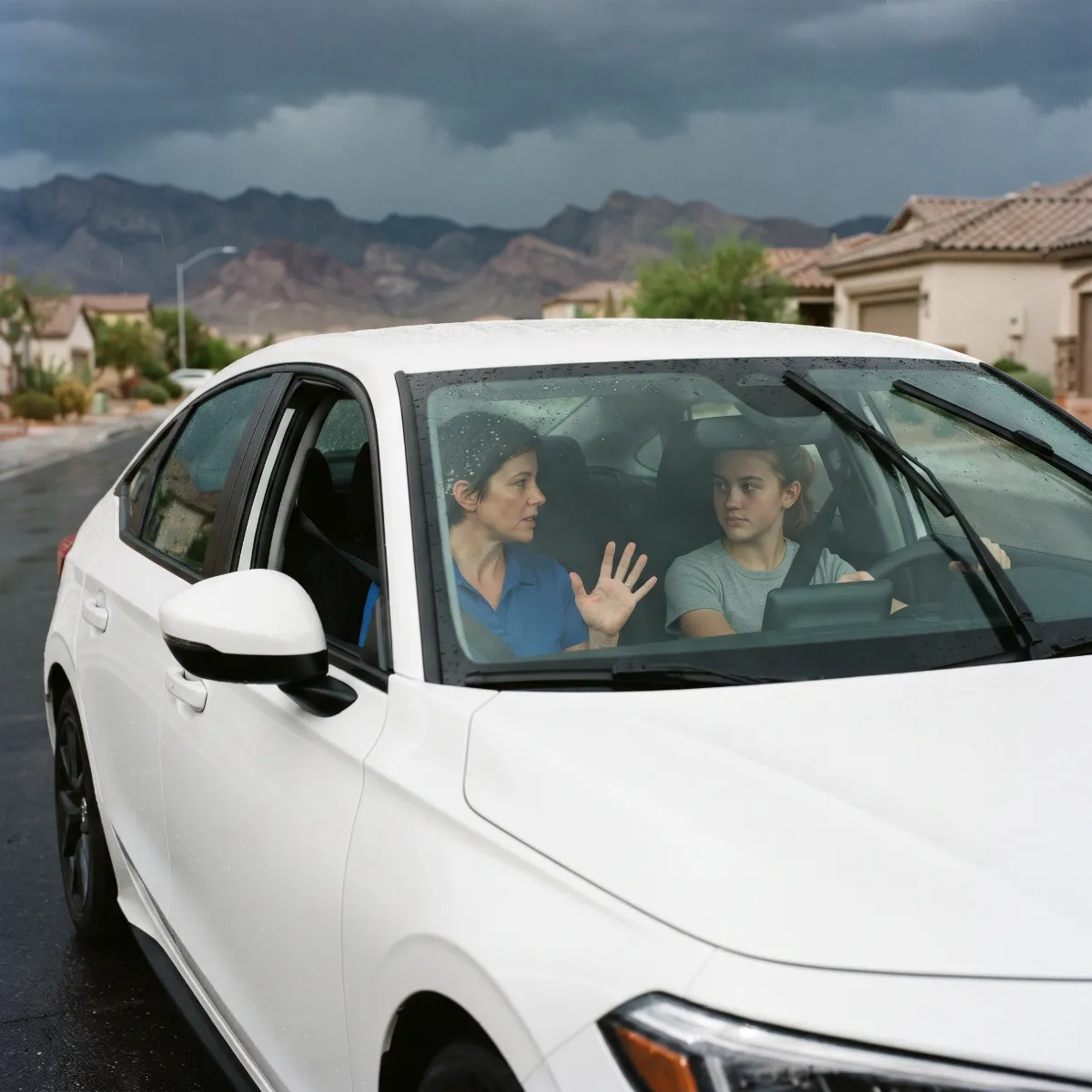
Slow down and never cross flooded roads
When monsoon rain falls between July and September, reduce your speed early and leave extra space behind the vehicle ahead. Never drive into standing or moving water on a flooded roadway. If a flash-flood warning or high-wind warning is active, wait until conditions clear before heading out.
This advice applies to every teen permit holder, adult beginner, and licensed driver across Las Vegas, Henderson, and North Las Vegas. Separately, Onramp does not run behind-the-wheel lessons during flash-flood warnings or high-wind warnings, and our school reschedules those lessons at no charge.
Why dry desert roads turn slick first
Long dry spells across the Las Vegas valley leave oil and dust sitting on the pavement. When the first summer rain arrives between July and September, water lifts that buildup to the surface and creates a slippery film. Tires lose grip easily during the opening minutes of a storm, even when the rain looks light.
On wide valley roads like Charleston, Sahara, Flamingo, or Tropicana, sudden braking on slick pavement can make a car slide past a stop line. Ease off the gas early and press the brake pedal gently so your tires keep their grip when pavement traction drops.
Flooded streets and low spots
Heavy desert downpours can fill roadways with water before drains clear it, especially near hills at the west and south edges of the valley. You cannot judge the depth of water or the condition of the road underneath from the driver seat. Turn around and pick another route instead of crossing a flooded street.
A common error for new drivers is following the bumper of a larger vehicle through deep water just because that vehicle made it across. Every compact sedan sits lower to the ground, and water depth can shift from one lane to the next. Choosing a dry detour is always the safer call.
High winds and storm lesson rescheduling
Monsoon storms in the valley can bring high-wind warnings along with heavy rain, which pushes cars sideways on open stretches of US 95, I-15, and the 215 Beltway. Keep both hands steady on the wheel and avoid sudden lane changes when gusts hit. If visibility drops or wind makes steering hard, pull safely off the road.
Before driving in summer weather, check local weather alerts and make sure your glasses or contacts are clean if your permit requires them. If you have a lesson scheduled with Onramp and a flash-flood or high-wind warning is issued, our school reschedules your 2-hour drive at no charge.
Allow extra stopping time
Give yourself more time to stop than you think you need, especially during the first shower after a dry stretch. Smooth steering and early braking keep the car balanced on wet asphalt. If a storm builds while you are out with a supervising driver, waiting in a safe parking lot beats pushing through a flooded intersection.
Building calm habits before storm season
The next practical step is getting comfortable behind the wheel on dry roads before storm season arrives. Onramp offers 2-hour one-on-one lessons for teens and adults, starting on quiet residential streets or an empty lot before moving to multi-lane roads and freeways like US 95 and the 215 Beltway when you and your instructor agree you are ready.
Key monsoon driving points
Keep these seasonal facts and Onramp weather policies in mind from July through September.
- Monsoon seasonJuly to September, when summer rain follows long dry spells across the valley.
- Flooded roadwaysNever drive into standing or moving water, even if another car just crossed.
- Unsafe weatherOnramp does not run lessons during flash-flood or high-wind warnings.
- Weather reschedulingLessons postponed for unsafe weather are rescheduled at no charge.
This page provides general driving guidance based on instructor practice rather than specific Nevada DMV statutes. For official traffic laws and weather-related rules, check the Nevada DMV handbook on dmv.nv.gov.
Read the Nevada DMV websiteCommon questions on storm driving
Direct answers about desert rain, lesson cancellations, and wet-road preparation.
When is monsoon season in the Las Vegas valley?
Monsoon rain arrives between July and September. Long dry spells beforehand leave oil and dust on the pavement, which makes roads slick as soon as rain starts falling.
How many lessons do I need to handle summer storms?
There is no fixed count because readiness varies by driver. A single 2-hour evaluation lesson for $139 gives you a recommendation, and every first lesson begins on quiet residential streets or an empty lot.
What if a flash-flood warning starts before my lesson?
Onramp cancels and reschedules at no charge whenever a flash-flood warning or high-wind warning is active. We do not run behind-the-wheel lessons in unsafe weather.
How does a 2-hour lesson prepare me for bad weather?
Every behind-the-wheel lesson is one-on-one for 2 hours in a car with an instructor-side brake and an extra instructor mirror. Lessons start on quiet streets before building up, and end with a written summary.
Keep reading
Related guides and programs
Explore more local driving guides, student checklists, and one-on-one lesson options.
More guides
All driving guides
Browse local articles on Nevada licensing, valley roads, and everyday driving habits.
Checklists
Student resources
Find Nevada DMV licensing steps, document lists, and test preparation tools.
Lessons
Driving programs
See our teen, adult, nervous driver, and freeway behind-the-wheel programs.
Practice steady control with us
Practice calm control in a 2-hour lesson. We reply by phone, text or email within one business day, next day after hours, or call (702) 000-0000.
Call: (702) 000-0000Sending this form does not reserve a lesson, and our office confirms times by phone, text or email.
This is a demo. What you enter goes to Vegas Website Designs, and we only use it to reply to you.