
Mirrors, seat and hands: setting up before you drive
How should you adjust your seat, mirrors and hands before shifting into drive?
This guide is for teen and adult beginners preparing for their first time behind the wheel. Everything here comes from instructor practice at Onramp rather than a specific Nevada DMV rule.
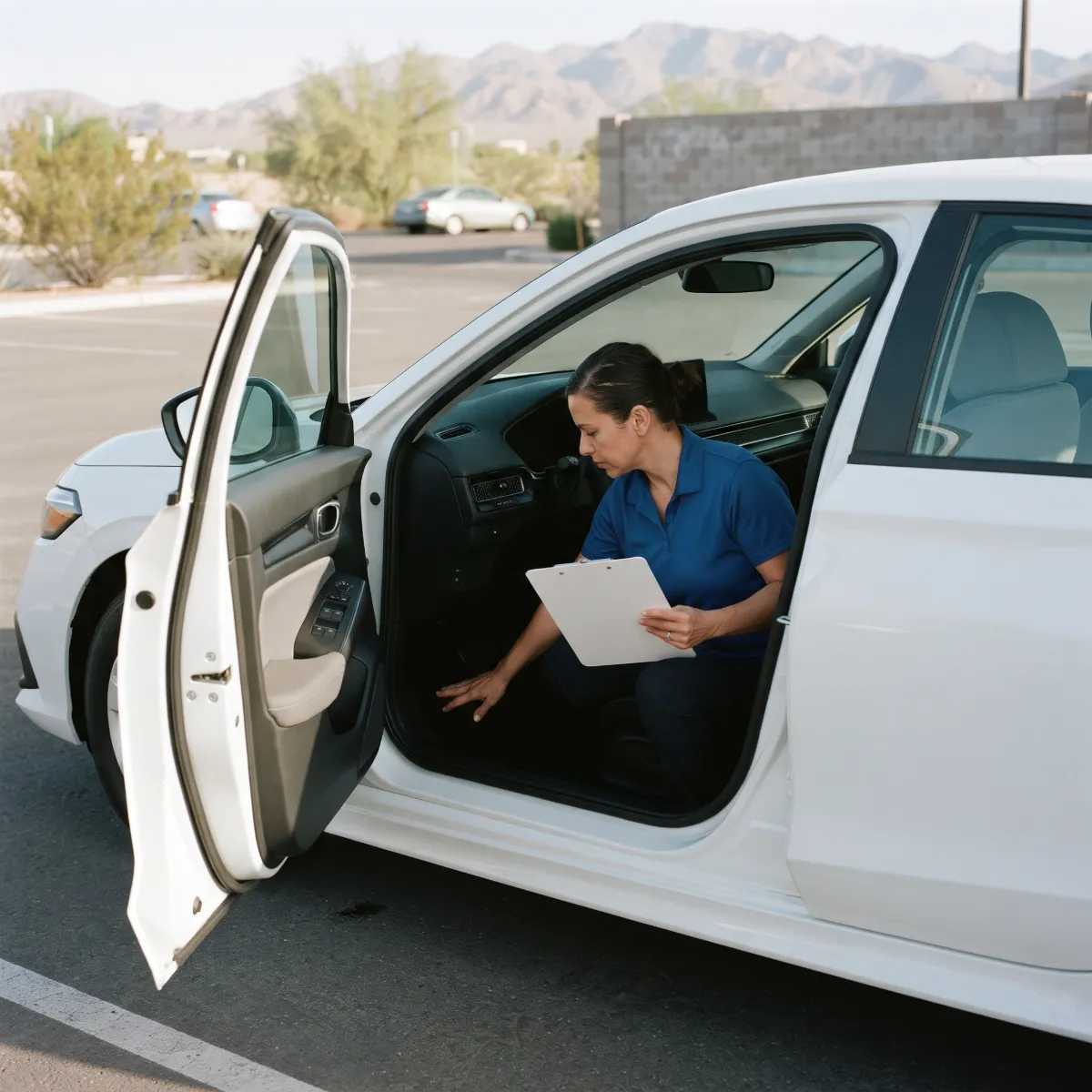
Start with setup before the car moves
Adjust your seat, steering wheel, mirrors and hand position while the car is still in park. Getting comfortable and seeing clearly around the car takes only a moment and prevents distractions once you start moving. Running through this routine before shifting out of park is a good habit before any drive.
This setup applies to every new driver, whether you are a teen holding a Nevada instruction permit or an adult returning to driving after years away. The only thing that changes from car to car is where the levers or buttons sit, so take a moment to locate them whenever you switch vehicles.
Set your seat and steering wheel first
Slide the seat so your right foot reaches the brake and gas pedals comfortably with a slight bend in your knee. Raise the seat height until you can see the road clearly over the hood without straining. Tilt the seatback upright enough that your wrists can rest on top of the steering wheel while your shoulders stay against the seat.
First lessons at Onramp take place in one of our 8 compact automatic sedans and start on quiet residential streets or in an empty lot. For every behind-the-wheel lesson, students need a valid Nevada instruction permit or driver license, closed-toe shoes and any glasses or contacts their permit requires.
Aim your mirrors to cut blind spots
Always adjust your mirrors after your seat is locked in place, because even a small seat change alters your view. Center the rearview mirror to frame the entire back window. Push the left and right side mirrors outward until the sides of your own car just disappear from view, which opens up the lanes beside you.
A common mistake is aiming the side mirrors too far inward so half the glass shows your own rear doors. That doubles what your rearview mirror already shows and leaves wider blind spots beside the car. Checking your mirrors only works well when each one covers a different slice of the road.
Place your hands for steady steering
Hold the outside rim of the steering wheel at the 9 and 3 o'clock positions, or slightly lower at 8 and 4 o'clock, with your thumbs resting gently along the rim. Keeping your hands on the outside of the wheel gives you balanced control during turns and keeps your arms clear of the center airbag.
To build the habit, practice sitting in a parked car with a licensed adult beside you if you hold a permit, and check the supervising-driver rules at dmv.nv.gov. Running through seat, wheel, mirrors and hands in the same order in park makes the sequence automatic before you merge onto multi-lane Las Vegas roads.
What an instructor checks in the car
Every Onramp training car is a compact automatic sedan equipped with an extra instructor mirror and an instructor-side brake, and each car is marked as a student driver vehicle. Having both that extra mirror and dual-control brake in the car gives new drivers steady support on quiet streets before moving into busier traffic.
Practice your setup in a first lesson
Run through this order the next time you sit in the driver seat before turning the key. If you want calm, one-on-one help turning setup into a steady habit on quiet residential streets, a 2-hour Single Lesson or Starter package at Onramp gives you structured time in a dual-control training car with a written summary afterward.
Pre-drive setup at a glance
Keep these 4 checks in mind every time you sit behind the wheel.
- Seat firstSet pedal reach and seat height before touching any mirror.
- Side mirrorsAngle them outward past your rear doors to open up side lanes.
- Hand positionHold the outer rim at 9 and 3 or 8 and 4 with relaxed thumbs.
- Instructor mirrorEach Onramp car includes an extra mirror for your instructor.
This page shares general driving guidance from Onramp instructors and does not state Nevada DMV rules. The Nevada DMV handbook is the official source for traffic laws and licensing rules.
Visit the official Nevada DMV siteCommon questions on pre-drive setup
Straight answers on adjusting your car before you start moving.
Should I adjust my mirrors or my seat first?
Adjust your seat first every time. Moving your seat forward, back or up changes your eye level and angle, which throws off any mirror adjustments you already made.
How long does pre-drive setup take before a drive?
It takes as long as you need to feel settled and see clearly, usually a couple of minutes at first. As you repeat the order, it becomes much smoother, though there is no fixed time limit.
What if I share a car with a parent or family member?
Reset the seat, steering wheel and all 3 mirrors every time you get in. Driving with someone else's setup makes it harder to reach the brake smoothly and creates blind spots.
How does a 2-hour lesson help with setup?
First lessons start on quiet residential streets or in an empty lot in a dual-control training car with an extra instructor mirror. After each 2-hour one-on-one lesson, you receive a short written summary of what went well and what to practice next.
Keep reading
More pages to help you prepare
Explore related guides, student checklists and behind-the-wheel programs.
Practice setup with an instructor
Start lesson one on quiet streets. Replies go out in one business day by phone, text or email, next business day after hours, or call (702) 000-0000.
Call: (702) 000-0000This form does not book or confirm a lesson. Our office confirms times by phone, text or email.
This is a demo. What you enter goes to Vegas Website Designs, and we only use it to reply to you.