
Sharing the road with tourists, rideshares and pedestrians
How do you stay calm around sudden rideshare stops, visiting drivers, and pedestrians in busy areas?
This guide helps teen permit holders, adult beginners, and refresher drivers handle heavy curb activity and foot traffic around Las Vegas. It is based on Onramp instructor practice and basic yielding rules rather than special local statutes.
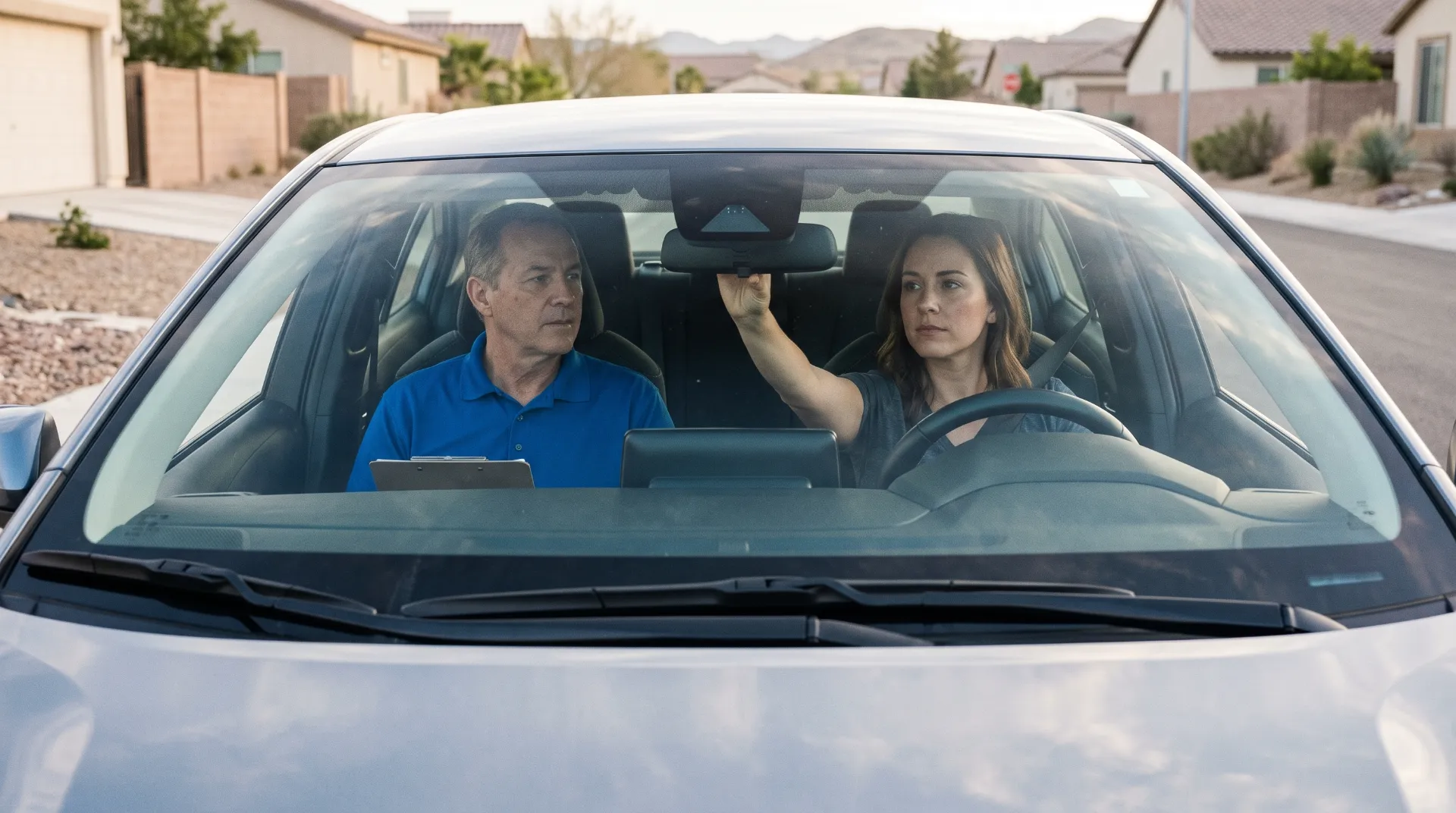
Leave space and watch the curb
Around busy parts of Las Vegas and near the resort corridor, expect sudden stops, last-second lane changes, and people stepping off curbs. Yield to pedestrians in crosswalks, keep extra space behind cars with hazard lights or brake lights, and look past the bumper ahead to spot trouble early.
Every licensed driver and permit holder runs into these patterns near Paradise, Flamingo, Tropicana, and other busy multi-lane roads. Even if you usually stick to quiet residential neighborhoods, knowing how to read curb traffic keeps you steady when you cross into busier sections of the valley.
Reading rideshare pick-up and drop-off zones
Drivers picking up or dropping off passengers can slow down suddenly in the right lane, tap their hazard lights, or pull across a lane to reach a driveway. When you see a vehicle creeping near a curb or angling toward a turnout, check your mirrors early so you can brake smoothly or change lanes cleanly.
On busy east-west arterials like Flamingo, Tropicana, and Sahara, choosing a lane with clear sightlines helps you avoid getting stuck behind curb-side stopping traffic. During Onramp lessons, every training car has an instructor-side brake and an extra instructor mirror.
Anticipating unfamiliar drivers and pedestrians
Visiting drivers who do not know the valley may hesitate at multi-lane intersections, miss a turn lane, or brake unexpectedly while checking navigation. At the same time, pedestrians near busy corridors can enter crosswalks while distracted, so yielding and checking blind spots before every turn is essential.
Learners sometimes fix their eyes straight ahead and rush through a green light or a right turn on red without sweeping both ends of the crosswalk. Taking one extra second to check left, right, and over your shoulder prevents close calls with both foot traffic and late-turning vehicles.
Building up to busy city corridors
You do not have to jump straight into resort-corridor traffic on your first drive. Onramp lessons begin on quiet residential streets or an empty parking lot, then progress to neighborhood roads, multi-lane arterials, and busier corridors only when you and your instructor agree you are ready.
To practice between lessons, drive wide multi-lane streets during lighter daytime hours first and narrate every curb-side vehicle, turn signal, and crosswalk you spot. Wearing closed-toe shoes and any glasses or contacts your permit requires keeps your focus on the traffic around you.
Watch front wheels and crosswalks
Watch the front wheels of cars stopped along the curb, not just their brake lights, because turned wheels tell you someone is about to pull into your lane. Give pedestrians full room to finish crossing before rolling forward, and remember that letting an uncertain driver merge ahead of you costs only seconds.
Choosing the right lesson for city traffic
If busy corridors make you tense, our Nervous Driver Lessons let you set the pace on quiet streets before moving into heavier traffic, while Refresher Lessons help licensed drivers adjust to city driving. Every 2-hour one-on-one lesson ends with a written summary covering what went well and what to practice next.
Busy corridor habits at a glance
Practical reminders for sharing multi-lane Las Vegas streets with visitors, rideshares, and walkers.
- Pedestrian yieldingYield to pedestrians in crosswalks and sweep both curbs before every turn.
- Curb-side trafficWatch for slowing cars, hazard lights, and doors opening in right lanes.
- Step-by-step paceLessons start on quiet streets and move to multi-lane roads when you are ready.
- Dual-control carsEvery training sedan has an instructor-side brake and an extra instructor mirror.
This article offers general city driving guidance beyond basic yielding rules. The Nevada DMV handbook on dmv.nv.gov is the official source for right-of-way and pedestrian traffic laws in Nevada.
Visit the Nevada DMV siteQuestions on busy Las Vegas traffic
Direct answers about yielding, nervous driver pacing, and city lesson structure.
Do I have to drive near the resort corridor on my first lesson?
No. Every first lesson starts on quiet residential streets or an empty lot, and we move to multi-lane arterials and busier corridors only when you and your instructor agree you are ready.
How many lessons does it take to feel steady in city traffic?
Every driver builds comfort on a different timeline, so there is no set number. You can start with one 2-hour Single Lesson for $139 for an instructor recommendation, and Nervous Driver Lessons let you set the pace.
What if I fail to yield to a pedestrian on a DMV skills test?
Under Nevada DMV rules, failure to yield is a serious violation that fails the skills test automatically. A retest can require waiting up to 30 days.
How does a 2-hour lesson help with rideshare and foot traffic?
Onramp lessons are one-on-one for 2 hours in a car with an instructor-side brake and an extra instructor mirror. You start on quiet streets before moving to multi-lane roads, and receive a written summary after each drive.
Keep learning
Continue with these pages
Read more local driving guides, check student resources, or browse lesson programs.
More guides
Local driving guides
See articles on monsoon rain, school zones, and getting a Nevada license.
Checklists
Student resource guide
Get Nevada DMV testing steps, required documents, and logbook links.
Lessons
Behind-the-wheel options
Explore Nervous Driver Lessons, Refresher Lessons, and Adult Driving Lessons.
Build calm city traffic habits
Request a 2-hour one-on-one lesson in Las Vegas. We reply by phone, text or email in one business day, next day after hours, or call (702) 000-0000.
Call: (702) 000-0000Submitting this form does not hold a lesson, and the office confirms by phone, text or email.
This is a demo. What you enter goes to Vegas Website Designs, and we only use it to reply to you.